Field craft
The Night Photographer's Kit and Cold-Weather Field Craft: Batteries, Dew, Safety and a Checklist
When a night session fails, the settings are rarely the reason. More often the battery died at 1 am, the lens fogged at 2 am, you got cold and packed up before the Milky Way cleared the ridge, or the tripod plate was still on the kitchen table. So this guide starts with a night photography gear checklist, then explains the physics behind it, then goes through the planning from a week out to the moment you press start.
At a glance
- Kit: camera, fast wide lens, tripod, intervalometer, three batteries, red headlamp, dew heater and power bank, a plan saved offline.
- Batteries: lithium cells deliver roughly half their capacity at −4 °F and recover when warmed. Keep spares in an inside pocket and swap warm for cold.
- Dew: the lens radiates to the sky, cools below the air temperature and then below the dew point. Run a heater band from the start. Wiping the lens doesn't fix it.
- Going home: seal the camera in a bag before entering a warm room and leave it an hour or two.
- You: dress for 20 °F colder than the forecast, because you'll be standing still for two hours, and tell someone where you are.
Night photography gear checklist
| Category | Items | Why |
|---|---|---|
| Camera | Body with manual mode, fast wide lens (14–24 mm, f/1.4–f/2.8), two memory cards, tripod plate attached, lens cap in a pocket | Cards and plates are the most-forgotten items. |
| Support | Sturdy tripod, a head that locks without creep, a hook-weight for wind | Every frame is 10–30 s, so the camera has to stay still. |
| Control | Intervalometer or cable release, its own battery checked | Sequences and bulb without touching the camera. |
| Power | Three camera batteries, USB power bank (10,000–20,000 mAh), the cable that fits | Cold halves battery capacity. The power bank also runs the heater. |
| Dew | Heater band sized to the lens, two hand warmers and a rubber band, lens hood, microfibre cloth | Dew ends more sessions than cloud does. |
| Light | Red headlamp, small white torch for foregrounds, spare cells | Use white light only when no shutter is open. |
| Warmth | Liner gloves plus mittens, insulated boots, layers, hat, sit pad, thermos | You get very cold standing still at 2 am. |
| Fixes | Gaffer tape, cable ties, a zip bag big enough for the camera, silica gel | Seal the camera in the bag before you go indoors. |
| Plan | Phone with the planning app, offline maps, the plan saved or printed (target, azimuth, time, frame) | You may have no signal, or a phone at 1 %. |
Camera batteries in cold weather
A lithium-ion battery works by a chemical reaction, and cold slows it down. Internal resistance rises, voltage drops under load, and the camera reads "empty" long before the cell is. Battery University puts consumer cells at about 50 % performance at −4 °F. At 14 °F the loss is smaller but you'll still notice it, and camera manuals warn of reduced capacity even at 32–59 °F. The loss is temporary. Once it's back at room temperature, the same cell gives its full capacity again. All the steps below rely on that.
- Carry three batteries for a night that would use one in summer.
- Keep the spares against your body, in an inside jacket pocket, not the bag on the ground.
- Swap warm for cold, not empty for full. When the camera warns, fit the warm spare and pocket the "dead" one. Half an hour later it will show charge again.
- Never charge a frozen battery. Charging below 32 °F plates metallic lithium on the anode and permanently damages the cell.
- Run the camera from the power bank if it accepts USB power, and keep the bank warm too, because it has the same chemistry.
- Switch off whatever you don't need: image review, the LCD between frames, Wi-Fi, Bluetooth, GPS, long-exposure noise reduction.
Stopping dew and frost on the lens
A clear night sky is very cold. It sends almost no heat back, so the front element of a lens pointed at it radiates away more heat than the air gives back, and ends up several degrees below the air temperature. Once the glass drops below the dew point, water condenses on it. First you get a haze that softens stars, then droplets, then, below 32 °F, frost. Dew doesn't fall from above. It forms on whatever is coldest, and that's the glass facing up. The timelapse guide covers dew on long sequences.
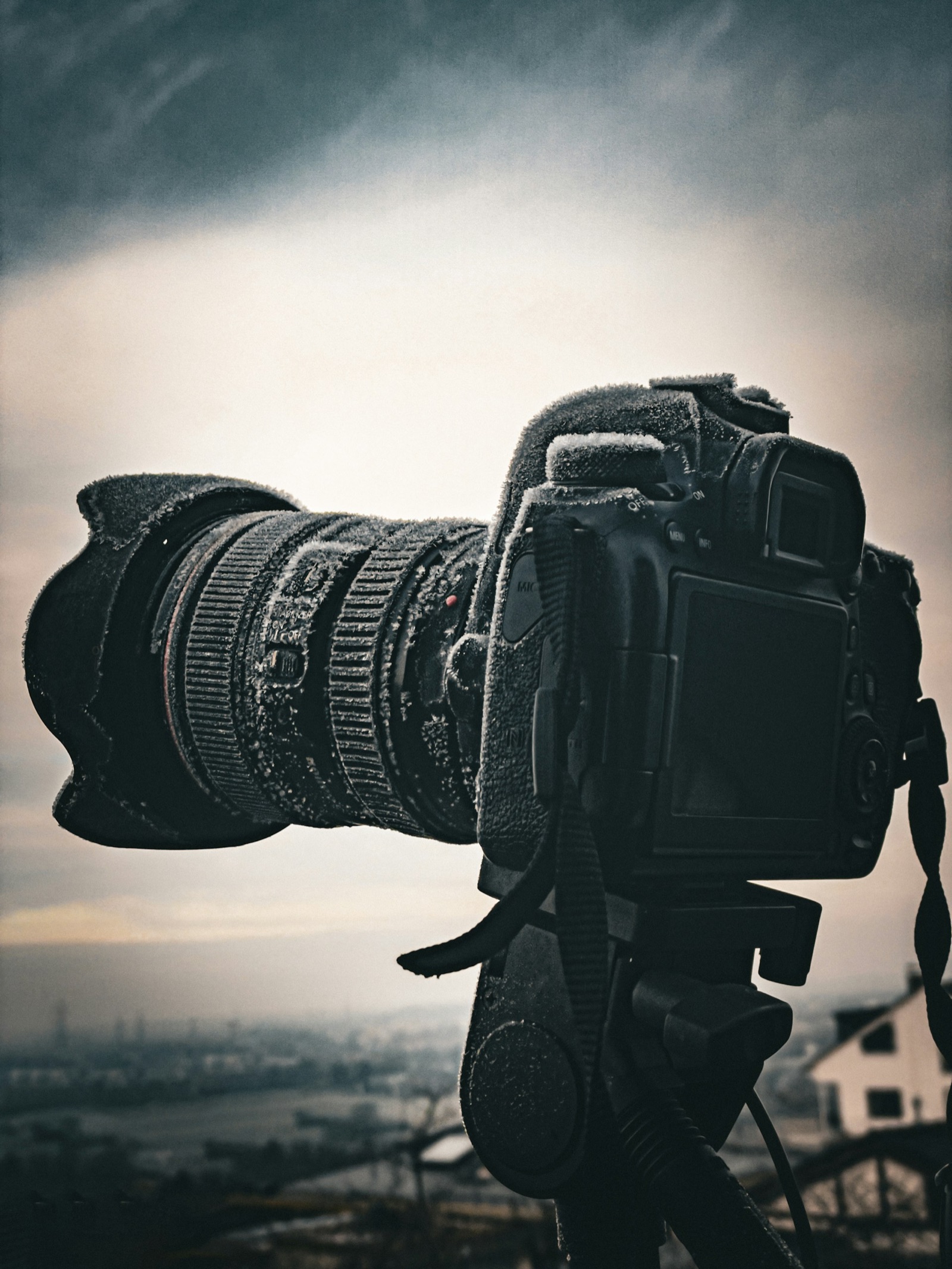
- Read the dew point. If the 2 am air temperature and dew point are within 4–5 °F, the lens will dew. Fog or mist in the forecast means the same thing.
- Heater band, on from the start. A strap around the lens barrel, run from the power bank, keeps the glass a couple of degrees above the dew point, which is enough. Fit it before dew forms, because a wet lens has to be dried first.
- Hand warmers as backup, held to the barrel with a rubber band, do the same job for a few hours. A lens hood blocks part of the cold sky from the glass, which slows the cooling.
- Don't breathe on it. Breath fogs a cold lens instantly, and the fog freezes. Check the front element with a red light from the side. Clear it with warmth, not a cloth, which smears water and scratches frost.
- Frost outside vs fog inside. Frost on the front element means the lens needs a heater. Fog inside the lens or on the sensor means warm moist air got in (a lens change in the open, a cold camera in a warm car) and only time fixes it.
Bringing a cold camera indoors
A camera at 23 °F carried into a room at 68 °F is far below the room's dew point, and water condenses on every surface: lens, sensor, circuit boards. Camera manuals say to place the device in a carrying case or plastic bag before exposing it to sudden changes in temperature.
- Before you enter the house, a heated car or a warm tent, seal camera and lens in a zip bag with the air squeezed out. Take the card out first if you want to start work.
- Leave it sealed an hour or two until it reaches room temperature. Condensation forms on the outside of the bag, where it doesn't matter.
Camera and tripod in the cold
LCDs and touchscreens. Liquid-crystal displays slow down below about 15 °F. Menus lag and the image smears, and it all goes back to normal when the camera warms up. Touchscreens need skin or a conductive fingertip, so wear liner gloves with touchscreen tips or learn the buttons. Set everything you can before dark.
Tripod legs in snow. Push the feet through to the ground, or fit snow shoes (the wide discs) so the legs don't sink through the exposure. Rubber feet slide on ice and spikes don't. Don't extend the thinnest leg section, because a leg that creeps 1 mm in 20 s turns stars into short trails. Foam pipe insulation on one leg gives bare hands something to hold, and it's the cheapest thing in this guide.
What to wear for night photography
The forecast temperature feels a lot colder when you're not moving. A night photographer stands in one place for two hours, often on a ridge or beside water, and the coldest hour comes at the end. As a rule, dress for 20 °F colder than the forecast at the hour you'll finish, and allow for the wind. Wear the usual three layers, which are a wicking base layer (wool or synthetic, never cotton), an insulating mid layer and a windproof shell. You can take one off on the walk in and put it back on when you stop.
- Hands: thin liner gloves for camera work inside mittens for waiting. Take the mitten off, not the liner. A hand warmer in each mitten.
- Feet: insulated boots a half-size up with thick socks, because you lose heat to the ground through the soles.
- Head and neck: a hat that covers the ears and a neck gaiter.
- Sit pad and thermos: foam between you and the ground while the sequence runs. A hot drink warms you up better than anything else you'll carry.
- The two-hour rule: if you're comfortable when you arrive, you're underdressed for the end. Add a layer before you feel cold.
Heat, humidity and insects. A desert night can start at 95 °F. The sensor runs hot and shows more noise, so use shorter frames and stack. In humid climates the dew point stays high all night, and you need a heater band in August as much as in January. Insects come to any light, including red, so repellent and sleeves matter more than the temperature. Carry water. You won't get heat stroke standing at the tripod, but you can on the walk in with a heavy bag.
Safety and light discipline
- Tell someone where you're going and when you'll be back, and text them when you leave the site.
- Check cell coverage before you rely on it, and save the map offline.
- The car: park where you can turn round, keep the keys in a zipped pocket, and leave a spare headlamp in the glovebox.
- Edges: scout drops and water in daylight, and never step backwards while looking at the screen.
- Animals: know what lives there, make noise on the walk in, and don't leave food out.
- Driving home at 4 am after four hours of cold is the most dangerous part of the night. If you're tired, sleep in the car first.
- New places: go with someone the first time, or arrive in daylight.

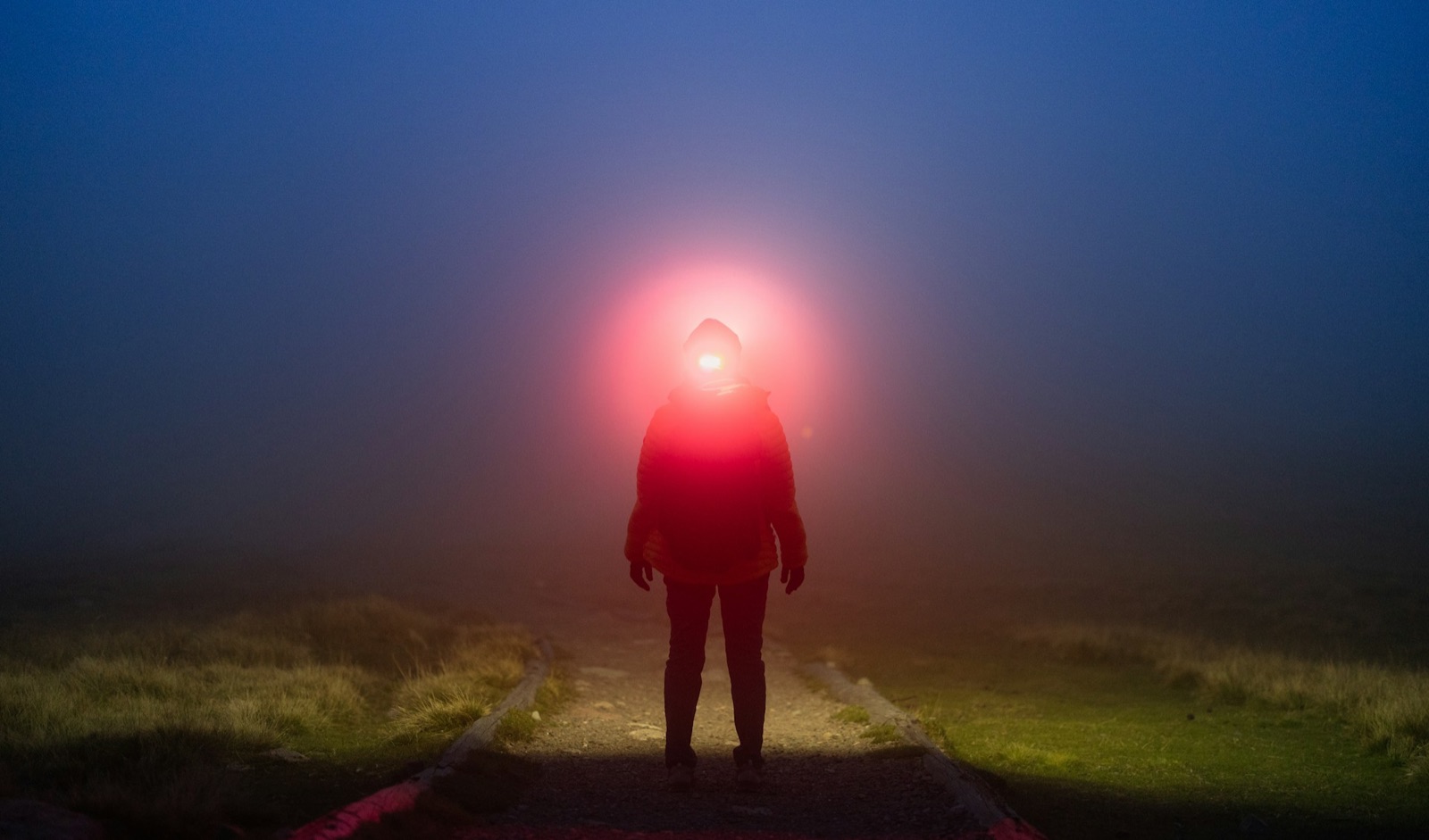
Light discipline. Red light protects your night vision and other people's exposures. Use white only to light a foreground or pack up, and ask first whether anyone's shutter is open. When you arrive at a busy site, turn the headlights off before the last bend and park facing away from the field. One sweep of white light ruins a 20-second frame for everyone within a hundred yards.
Planning by timeframe
A week out. Choose the target, then pick the night by the Moon. For the Milky Way you need a new Moon, or one that sets before the target rises. For lunar work, pick the phase you want (see the Moon phases guide). Watch the weather trend, and keep a second date free.
The Sun & Moon card in Still Dark gives astronomical twilight end and Moon rise and set for the site and date, so you know when to set off. Arrive before twilight ends, and know when the Moon will get in the way. Sky Events reminders can be set for the shower peak, pass or conjunction you're planning around.
The day. Look at cloud by layer, because a general forecast can say "clear" when there's high cloud, and high cloud still washes out the faint sky. Check the wind, and the temperature and dew point at 2 am. Charge everything, format cards, and set the camera clock and time zone so hundreds of frames sort correctly and match the plan.
The Weather card shows low, mid and high cloud separately, hour by hour, with temperature, dew point and wind for the exact hours you'll be out. Use those numbers to decide whether to run the heater from the start, and what to wear.
At the site.
- Arrive in twilight and scout: foreground, edges, where the target rises, where you'll stand.
- Level the tripod on firm ground, and hang the bag from the hook if it's windy.
- Fit the heater band before dew can form.
- Focus on a bright star at maximum magnification and tape the ring (how-to in the focusing at night guide).
- Test the frame with a short high-ISO exposure, then set the working exposure.
- Start, check the first three frames at 100 %, then leave it alone.
What changes with temperature
| Air temperature at 2 am | Batteries | Dew and frost | Hands | Screens |
|---|---|---|---|---|
| Above 50 °F | Normal. One spare. | Dew likely if humid. Heater advised. | Bare hands | Normal |
| 32 to 50 °F | Noticeably shorter. Two spares, kept warm. | Dew near-certain on clear nights. Heater on from the start. | Liner gloves | Normal |
| 15 to 32 °F | A quarter to a third lost. Three batteries, swap warm for cold. | Frost. Heater plus hand warmers. | Liners inside mittens, hand warmers | Slower. Use it less. |
| Below 15 °F | About half. Run the camera from a power bank kept warm. | Frost forms fast. Breath freezes on the glass. | Mittens off for seconds only. Tape tabs on controls. | Lags and smears. Barely use it. |
The "left it at home" list, and phones
These are the things people forget, in roughly the order they find out: the memory card (still in the computer), the tripod plate (on the other camera), the intervalometer's coin cell, the lens cap (left on for the first 40 frames), the power bank's cable, the headlamp's batteries, the spares (still on the charger), and the plan itself. Pack the night before from the table above, and put the card in the camera last.
Phones. A phone runs on a lithium battery too, and it shuts down in the cold before the camera does. Apple rates its devices for 32–95 °F ambient and says cold may temporarily shorten battery life and turn the device off. It recovers when warmed. Keep it in an inside pocket, take it out to check the plan, then put it back. Don't use it as a remote more than you have to, because Bluetooth and a lit screen drain it, and carry a power bank. If it shuts down it isn't broken. Hold it against your body for ten minutes and it will start again.
Common mistakes
- One battery, in the camera, on a cold night.
- No dew control, because the first frame looked fine.
- A white headlamp or a phone at full brightness at a shared site.
- Wrong footwear. In trainers on frozen ground, your feet will give up before the batteries do.
- Checking the temperature but not the dew point.
- Going alone to a new place in the dark.
- Leaving the LCD on between frames, which drains the battery for no reason.
- Not setting the clock and time zone, so the frames sort wrongly later.
- Walking into a warm house with the camera in your hand.
FAQ
How much battery does a camera lose in cold weather?
Roughly half at −4 °F, less at 14 °F, and a noticeable amount even at 32–59 °F. The loss is temporary, since the battery recovers when warmed, so keep spares in an inside pocket and rotate them.
Why does my lens fog up on a clear night?
The glass radiates heat to the cold sky, cools below the air temperature and then below the dew point, and water condenses on it. A heater band, or hand warmers on the barrel, keeps the glass a couple of degrees above the dew point.
Do I really need to bag the camera before going indoors?
If the camera is cold and the room is warm, yes. Seal it in a plastic bag outside and leave it an hour or two. Condensation then forms on the bag, not inside the camera.
Can I use a phone as a camera remote in the cold?
Yes, but only when you have to. Phones shut down in the cold before cameras do. A dedicated intervalometer with its own cell is more reliable. Keep the phone warm and use it for the plan, not the shutter.
Sources and further reading
- Battery University — BU-502: Discharging at High and Low Temperatures (about 50 % performance at −20 °C; the reduced capacity recovers at room temperature).
- Battery University — BU-410: Charging at High and Low Temperatures (no charging below 0 °C; lithium plating).
- Nikon — Caring for the Camera and Battery: Cautions (bag the camera before a sudden temperature change; reduced capacity at 0–15 °C).
- BBC Sky at Night Magazine — How to stop dew forming on your telescope (radiative cooling below the dew point; heater bands, hand warmers, dew shields).
- Apple Support — iPhone and iPad operating temperature (0–35 °C ambient; cold temporarily shortens battery life and may turn the device off).
- REI Expert Advice — How to Dress in Layers (base, mid and shell layers; avoid cotton).