Eclipses
The Total Solar Eclipse of August 2, 2027: Where to See It and How to Photograph It Safely
On Monday, August 2, 2027, the Moon's shadow crosses the Strait of Gibraltar, runs the length of North Africa and reaches the Red Sea. For anyone in Europe or Africa, the total solar eclipse 2027 brings on August 2 is the one to plan for. At the point of greatest duration, about 37 miles south-east of Luxor in Egypt, the Sun is hidden for 6 min 23 s with the Sun 82° up. That's the longest totality on land since 1991, and there won't be a longer one on land until 2114. Southern Spain gets 2–5 minutes with the Sun 37–39° above the eastern horizon. That's low enough to fit a foreground under the corona, so Spain is the better place for a landscape shot.
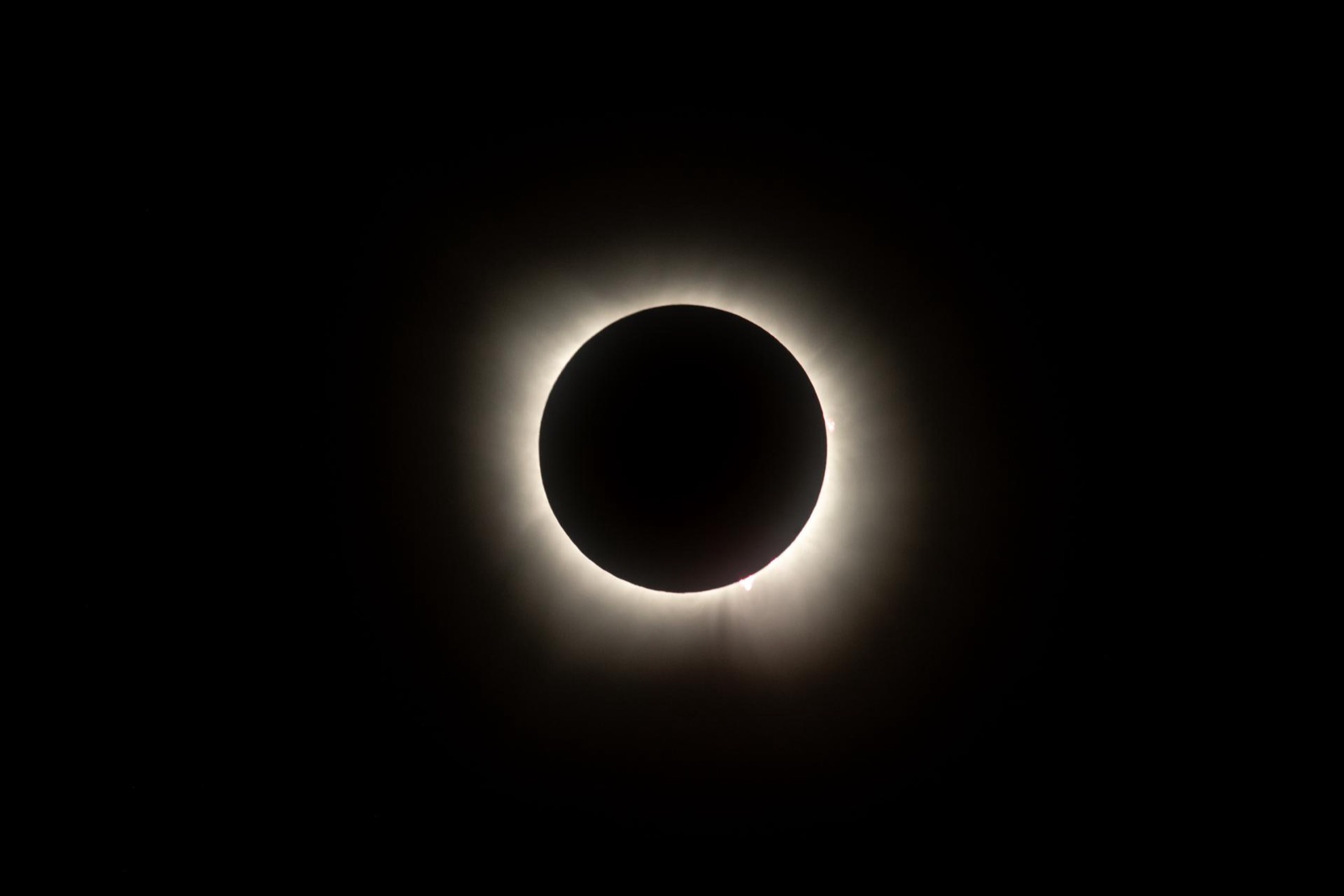
If you're anywhere near the path, get inside it. The last sliver of photosphere is tens of thousands of times brighter than the corona, so at 99% partial you still need the filter and all you see is a dimmer afternoon. At 100% the filter comes off. You see the corona against a deep-blue sky, the horizon glows orange all the way round, and planets come out. Even a short totality is better than any partial eclipse.
At a glance
- When: August 2, 2027. Totality from about 10:45 CEST in Cádiz to about 13:45 in Yemen. Greatest eclipse is at 10:06 UT near Luxor.
- Where: a band 147–160 miles wide across southern Spain, Gibraltar, Morocco, Algeria, Tunisia, Libya, Egypt, Saudi Arabia, Yemen and Somalia. Partial across Europe, Africa and the Middle East.
- Safety: ISO 12312-2 glasses for your eyes, and a certified solar filter on the front of every lens, phone, binocular and telescope. Filters come off only during totality.
- Settings: partial phases 1/500–1/2000 s at ISO 100, f/8 through the filter. Diamond ring and beads 1/1000–1/4000 s. Corona bracketed from 1/1000 s to 1 s at ISO 100–400, f/5.6–8.
- Afterwards: blend the corona brackets, and turn the filtered partials into a composite or a time-lapse.
The 2027 eclipse path and the times
The umbra reaches land near Cádiz at about 08:46 UT, crosses Gibraltar and Tangier, and runs east-south-east over Oran, Sfax and Benghazi. It reaches the Nile at about 10:06 UT, crosses the Red Sea to Jeddah and Mecca and leaves via Yemen and Somalia. The path is 147 miles wide at Cádiz and 160 miles over Egypt. Totality gets longer along the track as the shadow slows and the Sun climbs, from 4 min 48 s on the centre line off Spain to 6 min 22 s over Sohag and Luxor. Cádiz and Málaga are near the northern edge of the band, so their totality is short. Tarifa is on the centre line and gets a long one.
| Place | Totality (approx.) | Mid-totality, local time | Sun altitude |
|---|---|---|---|
| Cádiz, Spain | ≈ 2 min 50 s – 3 min | 10:46 CEST | 37° E |
| Málaga, Spain | ≈ 1 min 50 s | 10:48 CEST | 39° E |
| Tarifa, Spain | ≈ 4 min 39 s | 10:45 CEST | 37° E |
| Gibraltar | ≈ 4 min 25 s | 10:46 CEST | 38° E |
| Tangier, Morocco | ≈ 4 min 50 s | 09:45 (UTC+1) | 37° E |
| Oran, Algeria | ≈ 5 min 06 s | 09:50 CET | 43° ESE |
| Sfax, Tunisia | ≈ 5 min 41 s | 10:08 CET | 56° ESE |
| Benghazi, Libya | ≈ 6 min 07 s | 11:27 EET | 67° ESE |
| Luxor, Egypt | ≈ 6 min 20 s | 13:02–13:05 EEST | 82° SSW |
| Jeddah, Saudi Arabia | ≈ 6 min 00 s | 13:22 AST | 77° W |
| Mecca, Saudi Arabia | ≈ 5 min 10 s | 13:23 AST | 76° W |
| Sanaa, Yemen | ≈ 2 min 12 s – 2 min 39 s | 13:44 (UTC+3) | 67° W |
Durations differ by a few seconds between sources because a city covers a lot of ground. Check the figure for the exact spot you'll stand on. Málaga to Tarifa is about 80 miles, and the drive gets you nearly three more minutes of totality.
Contact times: C1 to C4
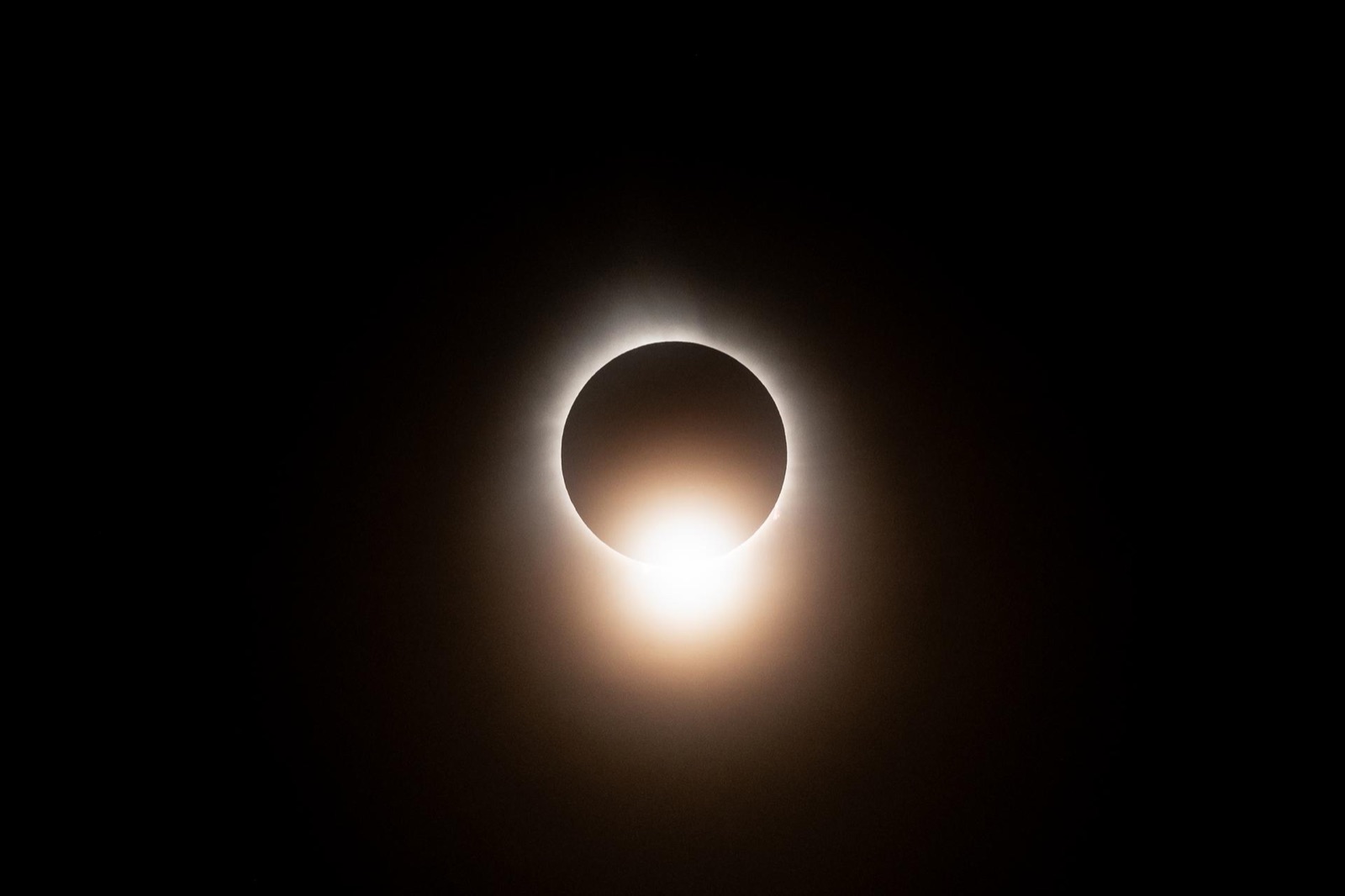
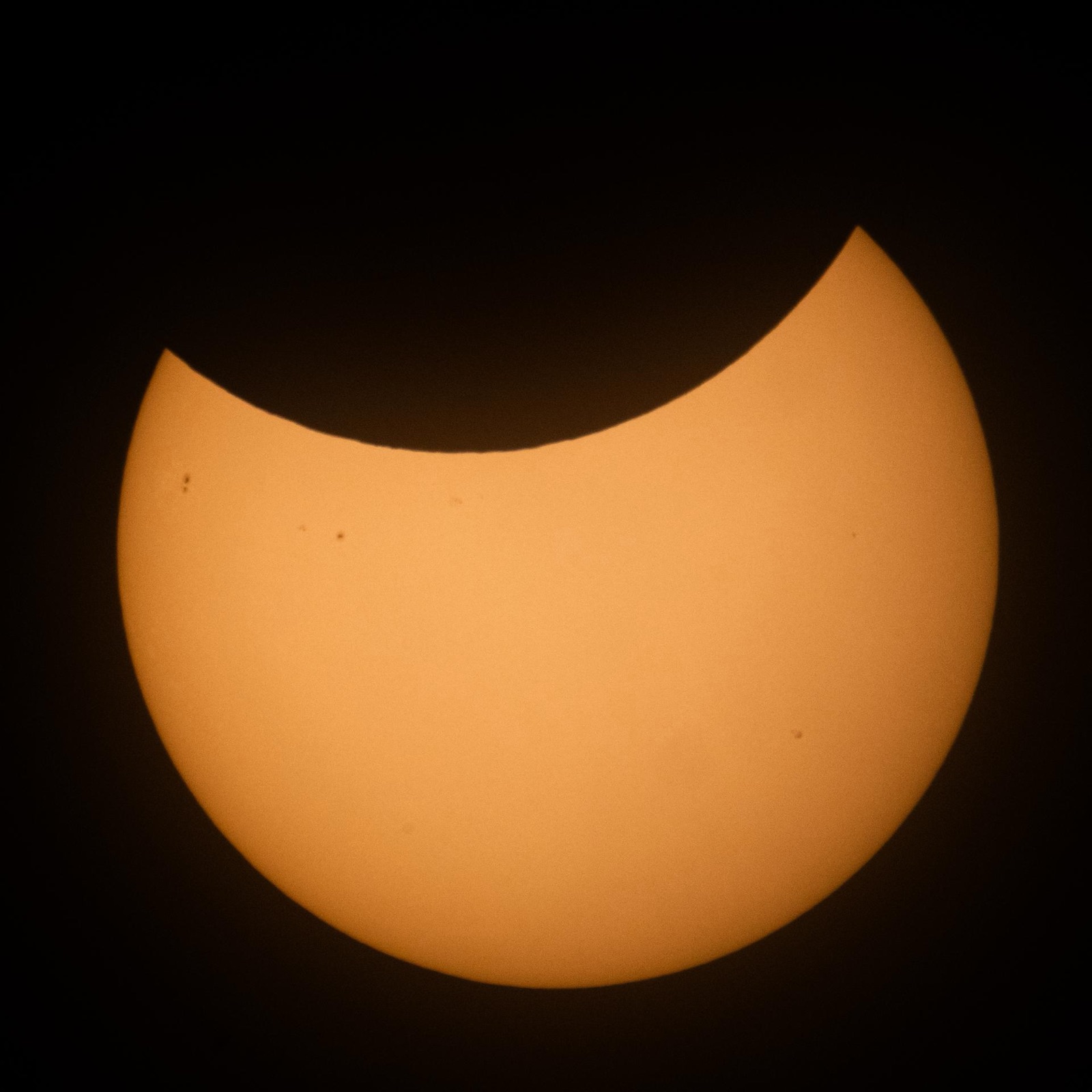
C1 is when the Moon's edge first touches the Sun. The partial phase begins, and the filter is on. C2 starts totality, marked by the diamond ring and Baily's beads, and the filter comes off. C3 ends totality, and the filter goes back on before the first bead of photosphere returns. C4 ends the partial phase, roughly 75 minutes later. The whole event runs about two and a half hours. The contacts differ from town to town for two reasons. The shadow is moving (a few thousand mph where it lands in Spain, nearer 1,250 mph over Egypt), and your distance from the centre line sets how much of the umbra passes over you.
Sky Events → Eclipses in Still Dark lists the August 2, 2027 eclipse with the contact times C1–C4, the local magnitude and the percentage of the Sun obscured for your location or any location you set, so you can compare two candidate sites before you book. Set reminders for C1 and for a minute before C2.
Weather: why Egypt, why Spain
Jay Anderson's climatology for the total solar eclipse 2027 track is the most favourable he has published. At Luxor the frequency of cloud in early August is 0.7%. Over eastern Libya and western Egypt the satellite record shows no August cloud on the eclipse date in 23 years. The problems there are dust and heat. Dust dims the corona slightly and warms the colours. Midday heat is around 104 °F, and you should take that seriously if you plan to stand in it for three hours.
Spain is good but not certain. Cádiz has an 88% frequency of sun-visible days and inland Andalucía averages under 15% cloud. The risks are morning marine stratus on the Atlantic coast and around the Strait (Gibraltar's figure is nearer 74%) and, some years, Saharan dust. Inland Morocco is clearer than Tangier's shoreline. The Saudi Red Sea plain averages about 10% cloud with heavy dust, and inland Yemen about 20%. Wherever you go, be ready to move on the day.
Solar eclipse safety: eyes, optics and sensors
- Eyes: only glasses or handheld viewers certified to ISO 12312-2, from a manufacturer or dealer on the American Astronomical Society's safe-supplier list at eclipse.aas.org. Sunglasses, exposed film and smoked glass are not safe.
- Optics: a purpose-made solar filter goes on the front of every camera lens, phone lens, binocular objective and telescope. Never put a filter at the eyepiece, where concentrated sunlight cracks it in seconds, and never look through an unfiltered viewfinder, even at 90% partial.
- Sensors: a telephoto lens works like a magnifying glass. A few seconds on the unfiltered Sun can burn the shutter, the sensor or the baffles, and mirrorless bodies keep the sensor exposed all the time. Keep the filter on from C1 to C2 and from C3 to C4.
- The only exception: between C2 and C3 everything comes off. The corona is about a million times fainter than the photosphere. Set a timer for C3 and refit the filter when it sounds.
Solar eclipse camera settings for each phase
The figures below come from Fred Espenak's exposure guide at ISO 100 and f/8. ISO 400 gives you two more stops, and f/5.6 one more.
- Partial phases (filter on): 1/500 s through an ND 5.0 film filter is the tabulated value, but filters vary, so bracket 1/500–1/2000 s after a test on the uneclipsed Sun. Shoot every 2–5 minutes for a sequence.
- Diamond ring and Baily's beads (filter off at C2, on at C3): 1/1000 s at f/8, 1/2000 at f/5.6, up to 1/4000 s at ISO 400. Each lasts 10–20 seconds, so shoot a burst.
- Chromosphere and prominences: 1/500–1/1000 s in the first and last seconds of totality, when the thin red rim and its arches show on one limb.
- Corona: the guide runs from 1/250 s for the innermost corona at 0.1 solar radii to 4 s for the streamers at 8 radii. That's ten stops across the corona alone and fifteen from the beads to the outer streamers, so you can't record all of it in one frame. Bracket in whole stops from 1/1000 s to 1 s at ISO 100–400, f/5.6–8, and blend afterwards.
- Earthshine on the Moon: 1–2 s at ISO 400, f/5.6 brings up the faintly lit lunar disc. The corona blows out in that frame, which is fine.
- The 360° sunset: a wide lens, 1/30–1/4 s at ISO 400, f/4, panned in four frames.
- Planets and stars: a 24–35 mm frame with the eclipsed Sun and Venus, 1–4 s at ISO 800, f/2.8–4 on a tripod.
- People: faces lit by corona and horizon glow, 1/15–1/2 s at ISO 1600.
- Phones: the Sun is about 30 pixels across on a 12-megapixel main camera and digital zoom doesn't help. Filter the lens for the partial phases. In totality take the filter off and shoot a wide video of the landscape and the crowd as the light fades. Lock exposure before C2 and mount the phone on something.
What else is in the sky during totality
The eclipsed Sun sits in Cancer, a few degrees south-east of the Beehive cluster. These positions are from JPL Horizons for 10:00 UT on August 2, 2027. Venus is 2.8° west of the Sun at magnitude −3.9, the brightest thing in the sky after the corona. Mercury is 10° west at about −1.5. Jupiter is 21.6° east at −1.7 and sits 1.4° from Regulus, so the two make a close pair, one bright and one faint, left of the Sun. Mars is 61° east at +1.2 and hard to pick out. Saturn, 102° west, is below the horizon from Egypt. The Sun and Venus fit in a 5–6° field. To get Jupiter and Regulus in as well you need 45° or more, which means a 24 mm lens on full frame with the Sun on one side. Our planets guide covers how they look at different magnitudes if you're not used to picking them out.
Focal length for the Sun's disc
The Sun on August 2 is 31.5′ across, so the same rule as the Moon applies: the disc on the sensor is the focal length divided by 109. If you want the corona, keep the disc to a quarter of the frame height or less, because the streamers reach two or three solar radii and further.
| Focal length | Sun's disc on sensor | Share of 24 mm frame height | Good for |
|---|---|---|---|
| 200 mm | 1.8 mm | 8% | Sequences and composites with the outer corona |
| 400 mm | 3.7 mm | 15% | Corona to 3 solar radii with room to spare |
| 600 mm | 5.5 mm | 23% | Classic full-corona frame on full frame |
| 800 mm | 7.3 mm | 31% | Inner corona, beads, ring. Tight for the corona on APS-C |
| 1200 mm | 11 mm | 46% | Prominences and the chromosphere. Also the disc in the partial phases |
On a crop sensor, drop one row. The Sun moves its own diameter every two minutes, so at 800 mm and up you'll need to re-centre during totality or use a small tracker at solar rate.
Planning: a year out, a month out, the day
A composite that shows the filtered partial phases in an arc over a landscape, with the corona at the top, has to be planned in advance. In Spain the Sun climbs from roughly 25° to 50° during the eclipse while drifting from east towards east-south-east. Frame so that track crosses the composition, shoot the landscape unfiltered during totality at the same focal length, shoot the discs every five minutes, and assemble with a Lighten blend. In Egypt the Sun is near the zenith at totality, so a corona close-up is the better plan there.
The Planner in Still Dark draws the Sun's direction line on the map for any place and time. For the total solar eclipse 2027, set August 2 at your C2, read the Sun's altitude and azimuth at totality, then move along the map until the line runs over a landmark. The field-of-view overlay shows what your focal length and sensor take in, and the timeline's altitude curve shows the Sun's climb between C1 and C4.
- A year out (now): choose a region by weather and duration, then book. The Nile valley and Cádiz province are where most people want to be. Buy glasses and filters from the AAS list. Take one main camera and one second camera, no more.
- A month out: calibrate the partial exposure on the uneclipsed Sun through the filter. Programme the intervalometer or camera app for the totality bracket. Rehearse the whole sequence, filter removal included, at the Sun's real altitude for your site.
- The day: be on site two hours before C1. Focus on the Sun's limb through the filter and tape the ring. Start the partial sequence. Ten minutes before C2, check the bracket programme, set the C3 alarm and have your glasses in your hand.
Once the bracket is running, look up. Totality goes by quickly, so automate the bracket and spend most of it looking with your own eyes. If you have to operate a camera, decide beforehand on one thing you'll do (a diamond-ring burst, say), do it, and then take your hands off the camera.
The neighbouring eclipses
The total eclipse of August 12, 2026 across Iceland and northern Spain happened shortly before this was written, with 2 min 18 s at best. On February 6, 2027 an annular eclipse crosses Chile and Argentina with a ring of up to 7 min 51 s, partial across South America and western and southern Africa. Then the annular of January 26, 2028 runs from Ecuador and Peru across Brazil and Suriname to Spain and Portugal, and the total of July 22, 2028 crosses Australia and New Zealand with 5 min 10 s at maximum. If you want totality in Europe or Africa, plan for August 2, 2027. If you'd like to practise first on something that can't damage your camera, the lunar eclipse guide uses the same focal-length rule and a similar bracketing routine.
Common mistakes
- Forgetting the filter at C3. Set an alarm. Don't rely on remembering.
- Autofocus during totality. Focus on the limb through the filter beforehand and lock it.
- One "correct" corona exposure. No single exposure is correct, so bracket ten stops.
- Choosing a city by name when it sits at the edge of the path. Cádiz gets under three minutes, and Tarifa, 60 miles down the coast, gets nearly five.
- Unverified glasses from a marketplace seller. Buy from the AAS list.
- Spending totality behind a camera you didn't rehearse with.
FAQ
Where is the best place to see the August 2, 2027 eclipse?
For duration and certainty, go to the Nile valley around Luxor and Sohag. You get 6 min 20 s under a sky with a 0.7% chance of cloud, though it will be hot and dusty. For a landscape with the Sun at 37–39°, go to the Spanish centre line around Tarifa, with roughly 86–88% odds of clear sky.
Do I need a solar filter on my camera for the 2027 eclipse?
Yes, on the front of the lens, for everything except totality. Without one a telephoto can destroy the sensor. Remove it only between second and third contact.
What camera settings should I use for the corona?
ISO 100–400, f/5.6–8, manual focus, and a bracket from 1/1000 s to 1 s in whole stops, repeated for as long as totality lasts. Blend the frames afterwards, because the corona spans about ten stops.
Which planets will be visible during the 2027 total solar eclipse?
Venus, 2.8° west of the Sun at magnitude −3.9, will be obvious. Mercury (10° west, −1.5) and Jupiter (22° east, −1.7, next to Regulus) should show in a clear sky. Mars is faint and far to the east.
How long does the total solar eclipse 2027 last in Luxor?
About 6 min 20 s, at roughly 13:02–13:05 EEST, with the Sun 82° up. The maximum of 6 min 23 s is about 37 miles to the south-east.
Sources and further reading
- NASA GSFC Eclipse Web Site — Path of the Total Solar Eclipse of 2027 Aug 02 (greatest eclipse 10:06:37 UT at 25°30′N 33°11′E, 6 min 22.6 s central duration, 257.7 km path width, Sun altitude 81.7°; central-line times, widths and durations).
- Fred Espenak, EclipseWise — Total Solar Eclipse of 2027 Aug 02 (Saros 136, magnitude 1.079, countries in the path, partial visibility).
- Jay Anderson, Eclipsophile — Total Solar Eclipse 2027 August 2 (cloud climatology: Cádiz 88% sun-visible days, Gibraltar ≈74%, Luxor and western Egypt near-zero cloud, dust and marine stratus risks).
- American Astronomical Society — Solar Viewers and Filters (ISO 12312-2, the safe-supplier list, front-mounted filters only, filters off only during totality).
- Fred Espenak, NASA RP 1398 — Solar Eclipse Exposure Guide (Q values and shutter speeds for partial, beads, prominences and corona at 0.1–8 solar radii).
- Space.com — Total solar eclipse 2027: a complete guide (city-by-city local times, durations and Sun altitudes; longest on land since 1991 and until 2114).