Sky calendar
What's in the Sky in October 2026: Moon, Planets, Meteors and What to Photograph
Here's what's in the sky in October 2026: Saturn at opposition on the 4th, and a crescent Moon that passes in front of Jupiter before dawn on the 6th for most of North America. The Draconids peak under a moonless sky on the 8th–9th. For the Orionids on the 21st–22nd you have to wait until the gibbous Moon sets. Venus leaves the evening sky at inferior conjunction on the 24th and the Hunter's Moon rises on the 26th. The dark window is the 5th to the 17th. If you go out for one thing, make it the crescent Moon with Jupiter and Regulus on the mornings of the 6th and 7th.
At a glance
- Oct 4: Saturn at opposition. Magnitude +0.3 in Cetus, rings tilted about 7.5°. It rises at sunset and is highest around 1 am.
- Oct 6: Moon occults Jupiter, 10:18 UTC. The 19 %-lit crescent hides Jupiter and its moons for up to an hour, seen from most of the contiguous US, Canada and Mexico.
- Oct 8–9: Draconids in the evening, no Moon, 5–10 meteors an hour at best.
- Oct 21–22: Orionids, about 20 an hour once the 80 %-lit Moon has set, roughly 3 am to dawn.
- Oct 26: Hunter's Moon, full at 04:12 UTC. EU clocks go back the day before, Oct 25.
What's in the sky in October 2026, date by date
Times are UTC, so convert to your local time. Separations are geocentric.
| Date (UTC) | Event | How to see it |
|---|---|---|
| Oct 3, 13:25 | Last quarter Moon | Rises around midnight. |
| Oct 4, ~12:00 | Saturn at opposition, mag +0.3 | East at dusk, due south around 1 am local. |
| Oct 5, 05:30 | Mars 1.2° S of the Moon | Pre-dawn, east. An occultation along a limited track, a close pairing elsewhere. |
| Oct 6, 10:18 | Moon occults Jupiter (0.2°) | Before dawn, low in the east, from most of North America. |
| Oct 7, 02:57 | Regulus 0.6° N of the Moon | Crescent, Jupiter and Regulus in one frame. |
| Oct 9, ~01:00 | Draconid peak, ZHR 5–10 | Evening of Oct 8, radiant high in the north-west. No Moon. |
| Oct 10, 15:50 | New Moon | Darkest nights of the month, Oct 5–17. |
| Oct 12, 10:00 | Mercury greatest elongation east, 25.2° | Evening. Southern hemisphere only. |
| Oct 12, 20:08 | Mercury 2.1° N of the Moon | Two-day crescent low in the west after sunset. |
| Oct 14, 20:25 | Antares 0.4° N of the Moon | Low in the south-west at dusk. |
| Oct 16, 22:56 | Moon at apogee, 251,431 mi | — |
| Oct 18, 16:13 | First quarter Moon | Sets around midnight. |
| Oct 21–22 | Orionid peak, ZHR ~20 | 3 am to dawn, once the gibbous Moon has set. |
| Oct 24, ~03:00 | Venus at inferior conjunction | Not visible. Back in the dawn sky in November. |
| Oct 24 | Moon 6.8° from Saturn | Gibbous Moon below Saturn all evening. |
| Oct 25, 01:00 | EU/UK clocks go back one hour | Evenings dark an hour earlier by the clock. |
| Oct 26, 04:12 | Full Moon (Hunter's Moon) | Rises east-north-east near sunset on the 25th and 26th. |
| Oct 28, 01:11 | Pleiades 1.0° S of the Moon | Nearly full Moon beside the cluster. Perigee at 18:01, 226,434 mi. |
October 2026 full Moon and the dark window
Last quarter Oct 3 (13:25 UTC), new Oct 10 (15:50), first quarter Oct 18 (16:13), full Oct 26 (04:12). The October 2026 full Moon is the Hunter's Moon, the one that follows September's Harvest Moon. It falls two and a half days before the Oct 28 perigee, so it's a little larger than average but not a supermoon. The closest full Moons of the year come on Nov 24 and Dec 24. Like the Harvest Moon it rises only 20–30 minutes later each evening around full from mid-northern latitudes. That gives you three evenings, the 25th to the 27th, when the Moon rises in twilight, which is more than you get in most months.
The dark window for the Milky Way and deep sky is Oct 5–17. After last quarter the Moon doesn't rise until after midnight, and from the 11th a growing crescent sets in the early evening. Between the 18th and the 25th the Moon sets somewhere between midnight and 3 am, which leaves dark pre-dawn hours for the Orionids and the zodiacal light.
The Sun & Moon card shows moonrise, moonset, phase and percentage lit for any date and place, so you can quickly find the evenings when the Moon is down. Moon Details adds age, distance, apparent diameter and libration.
Planets visible in October 2026
Mercury reaches greatest eastern elongation on Oct 12, 25.2° from the Sun at about magnitude 0.0, in Libra. From the southern hemisphere this is the best evening apparition of the year. Look low in the west 30–60 minutes after sunset, with a two-day crescent 2° away on the 12th. From mid-northern latitudes the evening ecliptic lies flat along the horizon and Mercury sets in bright twilight, so you won't see it this month.

Venus is leaving the evening sky. Its elongation shrinks from 31° on Oct 1 to 13° at month's end, and it passes inferior conjunction on Oct 24 at about 03:00 UTC. Northern observers lose it in the first days of October, and southern observers keep a very low crescent for a week longer. It's back in the dawn sky from mid-November, with greatest brilliancy on Nov 29.
Mars is a morning object at magnitude +1.0, crossing from Cancer into Leo and rising an hour or so ahead of Jupiter. The disc is still only 7″, so it's an orange point for the naked eye and not a telescope target yet. The waning crescent passes 1.2° from it on Oct 5.
Jupiter is the bright morning planet, magnitude −2.0 in Leo, a few degrees from Regulus. It rises around 2 am local at the start of the month and shortly after midnight by the end, and stands 30–40° high in the east by dawn. The Oct 6 occultation is the main event of the month. From the eastern and central US the crescent covers Jupiter around 2:15–3:30 am local, and it reappears at the dark limb up to an hour later. Mars and Jupiter go on to a 1.2° conjunction on Nov 14–16.
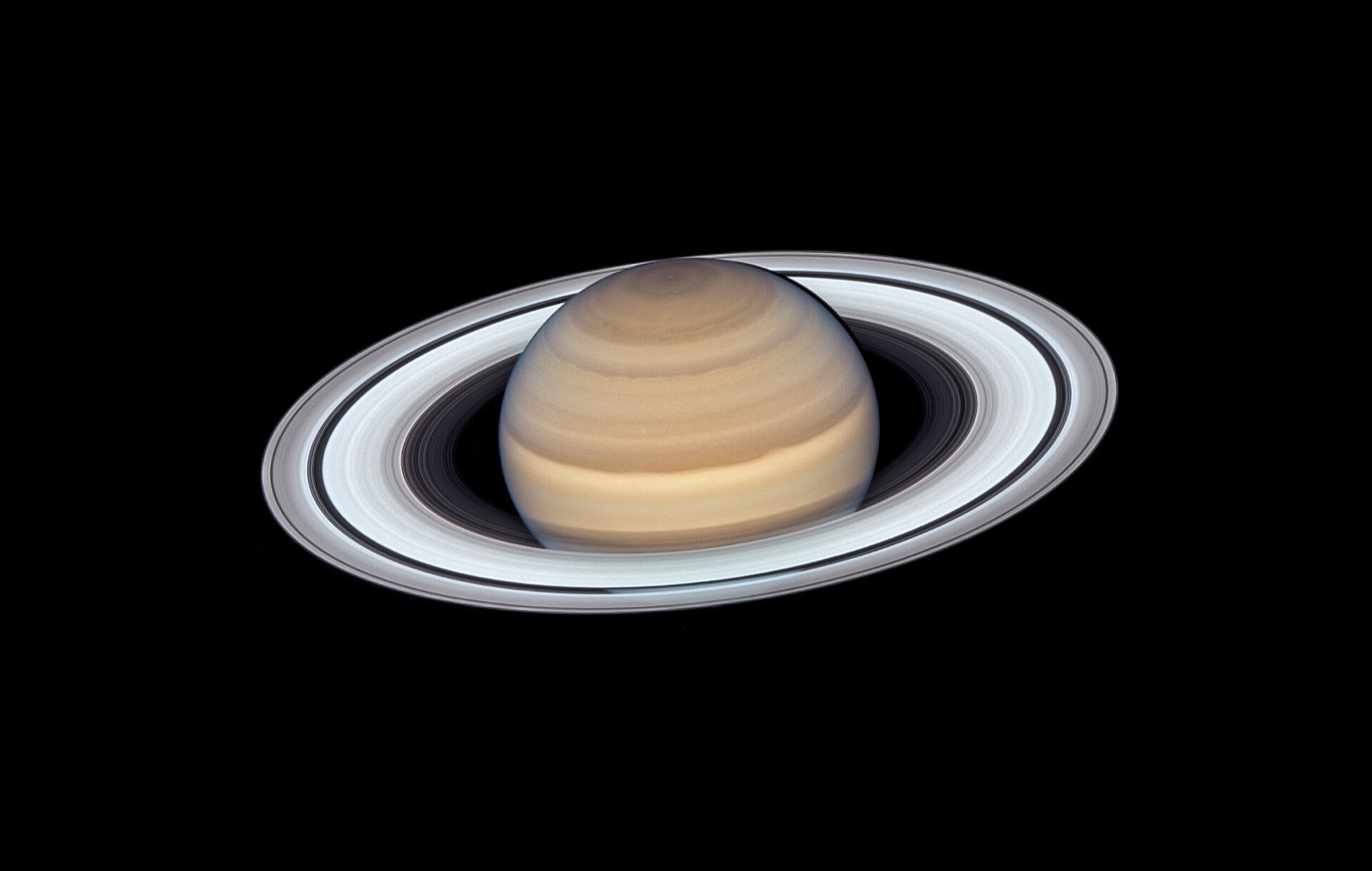
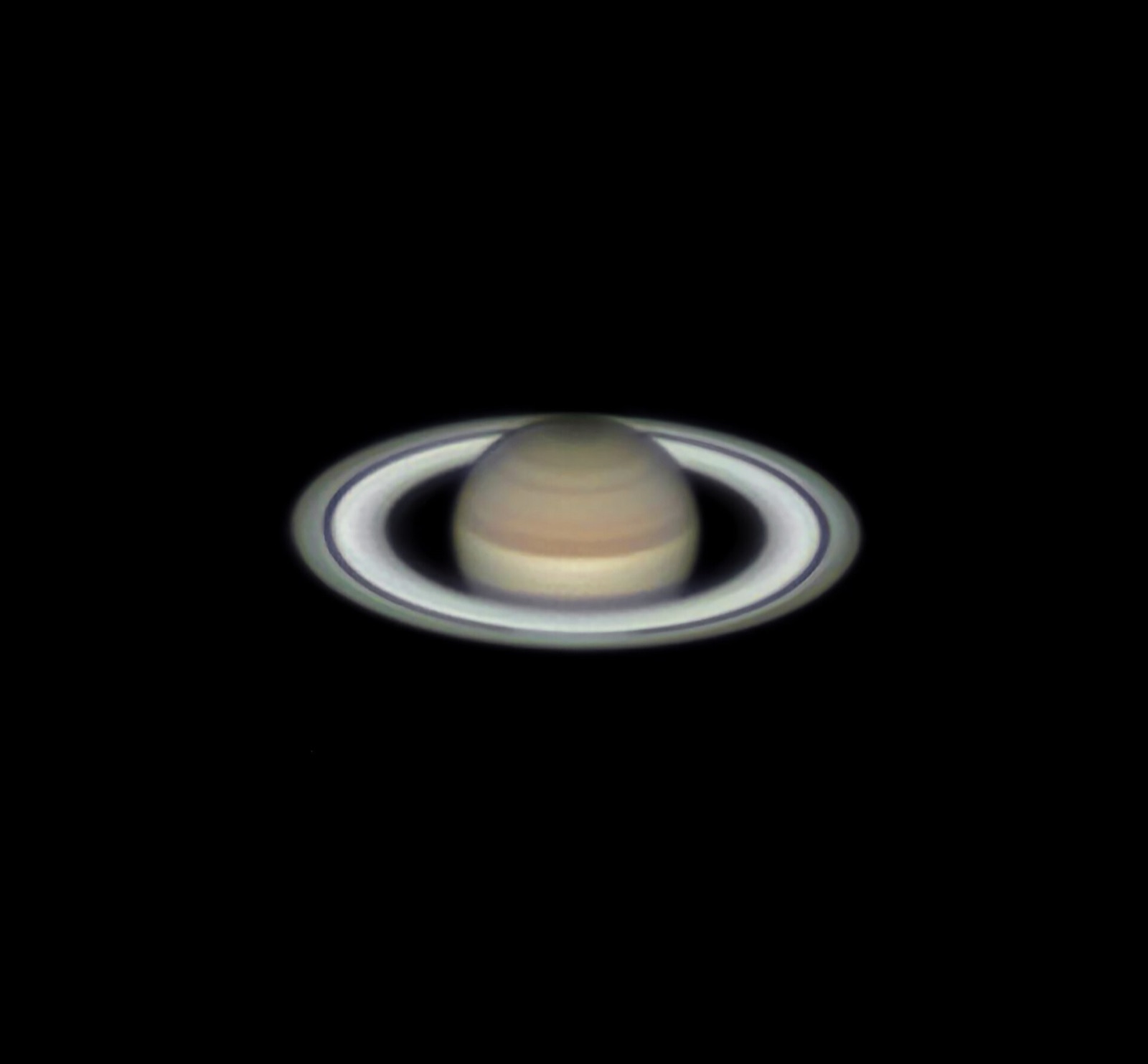
Saturn reaches opposition on Oct 4 at magnitude +0.3, 8.43 au away, in Cetus near the Pisces border. The disc spans 19.7″. The rings, 18 months past edge-on, are tilted about 7.5° with the southern face showing, so they look much thinner than in most pictures of Saturn. It rises at sunset, culminates around 1 am local at 40–50° from mid-northern latitudes, and stays an evening planet into early 2027.
Uranus (mag +5.7) sits in Taurus a few degrees from the Pleiades, heading for its Nov 25 opposition. In binoculars it looks like a faint blue-grey star. Neptune (mag +7.8) is in Pisces, just past its Sep 26 opposition, a telescope object all evening.
Meteor showers in October 2026
Draconids, peak around 01:00 UTC on Oct 9. The meteors are slow and there aren't many, ZHR 5–10 in normal years. The radiant in Draco is highest right after dusk, so this is one of the few showers you can watch in the evening. Go out on the evening of Oct 8 from the end of twilight to midnight, facing north. The Moon is a 2–5 % waning crescent that rises at dawn, so it won't get in the way. No outburst from comet 21P/Giacobini-Zinner is predicted this year.

Orionids, peak Oct 21–22. These are fast (41 miles per second) bits of debris from Halley's Comet, ZHR around 20, with a broad plateau through the 23rd. The 76–86 %-lit waxing gibbous Moon sets between about 1:30 and 3 am local, and after that the radiant near Betelgeuse climbs above 50°. The useful window is 3 am to astronomical twilight around 5:30 am. Expect 10–15 an hour from a dark site, and dress warmly.
The Taurids add a few slow, often bright meteors an hour all month. They peak Nov 5 and Nov 9, and we cover them in the November 2026 sky guide.
Conjunctions and close approaches
- Oct 5, pre-dawn: Moon and Mars, 1.2°. A 27 %-lit crescent beside orange Mars, low in the east from about 3 am.
- Oct 6, pre-dawn: Moon occults Jupiter. Disappearance at the bright limb, reappearance at the dark limb. It begins at 2:26 am in Boston, 3:22 am in Chicago, 2:15 am in Atlanta and 3:19 am in Kansas City, with the pair only 15–25° up, so you need a clear view down to the eastern horizon. 300–600 mm, 1/125–1/500 s, ISO 400–800, bracketed for earthshine. See the conjunction guide.
- Oct 7, pre-dawn: Moon, Jupiter and Regulus. The 10 %-lit crescent 0.6° from Regulus with Jupiter a few degrees away. This is the month's best grouping for a telephoto lens.
- Oct 24, evening: Moon 6.8° below Saturn, a wide pairing for a 50–85 mm lens over a landscape.
- Oct 28, all night: Moon 1° from the Pleiades. The near-full Moon is much brighter than the cluster, so bracket and blend.
Night sky this month: constellations and deep sky
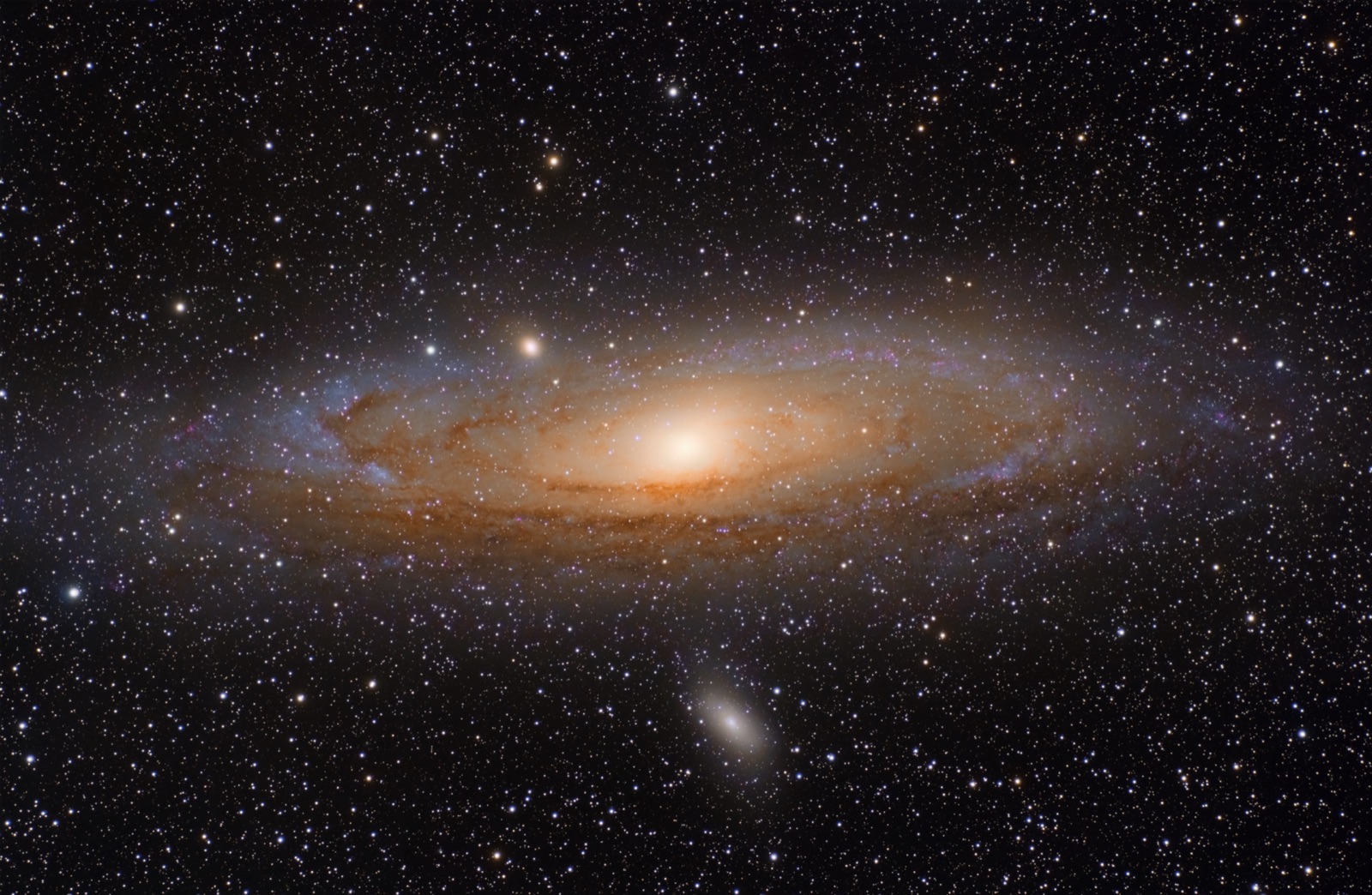
At 10 pm local in mid-October from mid-northern latitudes, Pegasus and Andromeda are near the zenith and the Andromeda Galaxy (M31) is as well placed as it gets all year, a naked-eye smudge from a dark site. Cassiopeia and Perseus stand high in the north-east with the Double Cluster between them. The Pleiades are 30° up in the east with Uranus nearby. Cygnus and the North America Nebula are still high in the west. Orion clears the horizon around midnight.

You can only see the Milky Way core in Sagittarius at dusk now. It sets by about 9 pm local from 40° N in early October and is gone by month's end, so early October is your last chance for a core shot this season. The summer arch from Cygnus to Aquila still spans the west in the early evening on the dark nights of Oct 5–17. The winter Milky Way through Auriga, Gemini and Orion rises after midnight and is well up by 3 am. From the southern hemisphere the core is in the west at dusk and the Magellanic Clouds and 47 Tucanae are rising in the south-east.
The zodiacal light is at its autumn best for northern observers. The ecliptic makes a steep angle with the eastern horizon before dawn, and the mornings of about Oct 6–23 are Moon-free at that hour. Look for a tall, faint pyramid over the sunrise point 90 to 60 minutes before sunrise from a dark site. It's easy to mistake for the start of dawn. It fades from the pre-dawn sky by early November.
Sun and twilight
The nights get longer quickly. In London the Sun sets at 18:38 BST on Oct 1 and 16:35 GMT on Oct 31, and astronomical night grows from about 8 h 40 min to 10 h 30 min. In New York sunset moves from 18:38 to 17:53 EDT and full darkness from 20:11–05:22 to 19:26–05:53. EU and UK clocks go back on Sunday Oct 25 at 01:00 UTC, and the US follows on Nov 1. ISS passes come in evening or morning seasons that depend on your latitude, so check Sky Events → Satellites for this month's run.
What to photograph this month
Of everything that's in the sky in October 2026, these are the three we'd photograph.
- Oct 6–7, before dawn: the crescent Moon with Jupiter and Regulus. The occultation from North America on the 6th, a tight grouping everywhere on the 7th, earthshine on both mornings. See the conjunction guide and Moon telephoto detail.
- Oct 21–22, 3 am to dawn: the Orionids. Wide lens at f/2.8, 15–20 s, ISO 3200, framed 40° from the radiant toward Gemini and Auriga. Plan with the meteor shower guide.
- Oct 25–27, at sunset: the Hunter's Moon rising behind a landmark. Three usable evenings, with the Moon rising east-north-east within half an hour of sunset. Line it up with the Moon behind a landmark method, and scout the spot in daylight.
Sky Events lists every item in this calendar for your own location with local times and a reminder for each, including the occultation's disappearance and reappearance, the meteor peaks and moonrise for the Hunter's Moon. In the 360° sky, search Jupiter and drag the time to 3 am on Oct 6 to check the Moon's altitude and direction before you pick a site.
FAQ
When is the full Moon in October 2026?
Monday Oct 26, 2026 at 04:12 UTC (00:12 EDT, 05:12 CET). It's the Hunter's Moon. For a rising Moon, go out on the evening of the 25th or 26th, within about half an hour of sunset. It isn't a supermoon. The Nov 24 and Dec 24 full Moons are closer.
Is there a meteor shower in October 2026?
Two. The Draconids peak on the evening of Oct 8 under a moonless sky, 5–10 meteors an hour at best. The Orionids peak Oct 21–22 at about 20 an hour under ideal skies, but with a gibbous Moon the useful window is after moonset, about 3 am to dawn.
Which planets are visible in October 2026?
Saturn all night, at opposition on Oct 4. Jupiter and Mars in the morning sky in Leo, rising after 1–2 am. Uranus and Neptune with binoculars or a telescope. Mercury is an evening object for the southern hemisphere only, around Oct 12. Venus is out of view because it passes between Earth and the Sun on Oct 24.
Where can I see the Moon cover Jupiter on October 6, 2026?
From most of the contiguous US, Canada and Mexico before dawn on Oct 6, roughly 2 to 4 am local. The exceptions are the Pacific states and the desert South-west, where the pair rises after the occultation is over. In Europe it happens in daylight. Sky Events gives the times for your exact position.
Sources and further reading
- Fred Espenak, Astropixels — Astronomical Almanac 2026 (GMT) (Moon phases, perigee/apogee, Moon–planet separations, Saturn opposition, Mercury elongation, Venus inferior conjunction).
- EarthSky — Saturn at opposition October 4, 2026 (magnitude, distance, Cetus, ring tilt) and Uranus at opposition November 25, 2026.
- EarthSky — Meteor shower guide 2026 (Draconid, Orionid and Taurid peaks, rates, Moon) and Mercury farthest from the sunset on October 12.
- In-The-Sky.org — Lunar occultation of Jupiter, 6 October 2026 (visibility zone); Sky & Telescope — the October 6 occultation (US city times).
- US Naval Observatory — Rise/set tables (London and New York sunset and Moon times); GOV.UK — When do the clocks change; NIST — Daylight saving time.
- EarthSky — Autumn's false dawn, the zodiacal light (morning window, ecliptic angle).